


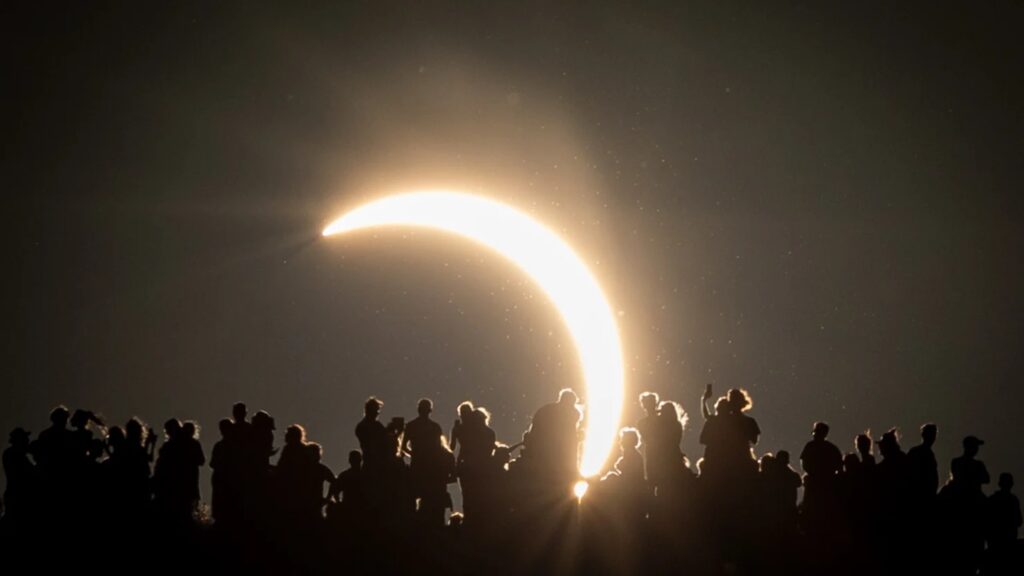
REYKJAVIK & MADRID — Hundreds of thousands of international tourists, astronomers, and eclipse chasers have gathered across Iceland and Spain to witness Europe’s first total solar eclipse in nearly three decades.
The rare celestial event transformed daytime into darkness along a narrow path of totality stretching from the Arctic Ocean down through Western Europe, driving a massive surge in local tourism and hospitality revenue across host regions.
Prime Viewing Locations: From Icelandic Fjords to Spanish Coastlines
The path of totality offered a breathtaking multi-minute window where the Moon completely obscured the Sun, revealing the solar corona to observers positioned within the optimal viewing corridor.
-
Iceland’s Coastal Fjords: Coastal towns near Reykjavik and Snæfellsnes Peninsula experienced over two minutes of complete darkness, accompanied by a noticeable temperature drop and dramatic sunset colors surrounding the horizon.
-
Spain’s Northern and Eastern Corridors: From the northern coast through rural inland regions and out to the Balearic Islands, major urban hubs including Valencia and Palma de Mallorca saw the eclipsed Sun set over the Mediterranean Sea.
-
Partial Eclipse Across Europe: Major capital cities outside the path of totality, including London, Paris, and Berlin, witnessed a deep partial solar eclipse during late afternoon hours.
European Total Solar Eclipse Fast Facts:
• Path of Totality: Arctic Ocean, Greenland, Iceland, Northern/Eastern Spain
• Prime Destinations: Reykjavik (Iceland), Northern Spain, Balearic Islands
• Maximum Totality Duration: ~2 minutes 18 seconds
• Significance: Europe's first total solar eclipse visible from the continent since 1999
• Economic Impact: Record-high hotel occupancy & flight bookings across Iceland and Spain
Economic Boom for Local Hospitality and Travel Sectors
The eclipse delivered a multi-million-euro boost to regional economies, with travel agencies and hotel networks reporting full bookings months in advance of the event.
Key Factors Driving the Astronomical Tourism Surge
-
Unprecedented Hotel Demand: Hospitality venues across Iceland and northern Spain reported 100% occupancy rates, with special viewing venues and pop-up campsites established to accommodate the influx of visitors.
-
Chartered Eclipse Flights: Commercial airlines offered specialized high-altitude observation flights, allowing travelers to view the eclipse above potential cloud cover along the path of totality.
-
Local Festivals & Astronomy Events: Dozens of municipal governments organized science festivals, public viewing parties, and outdoor concerts to welcome global travelers.
Safe Viewing Standards and Future Solar Eclipses
Public health organizations and astronomy societies across Europe distributed millions of certified ISO-standard solar viewing glasses to ensure safe observation during the partial phases of the eclipse.
As the shadow of the Moon moves across the globe, skywatchers are already turning their attention to future celestial events, with the next total solar eclipses set to cross North Africa and Australia in the coming years.



![Saudi Arabia's Crown Prince Mohammed bin Salman walks alongside Turkish President Recep Tayyip Erdogan during their meeting in Mecca on August 7 [Handout via AFP] By Brian Osgood](https://www.bigbosedition.us/wp-content/uploads/2026/08/WhatsApp-Image-2026-08-08-at-8.16.46-PM-470x313.jpeg)








Comment