


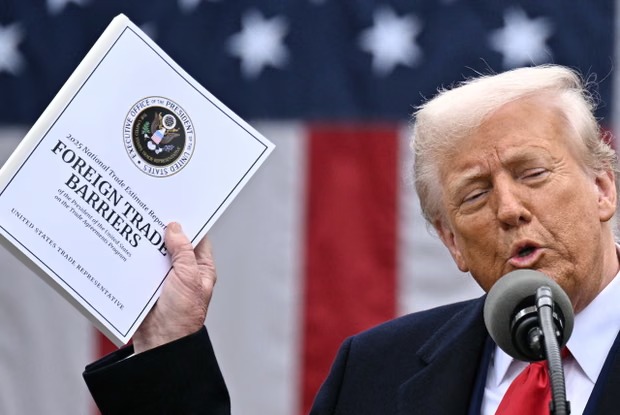
WASHINGTON — Twenty-five states sued the Trump administration Monday over its latest tariffs, calling them a pretext for replacing import taxes the Supreme Court struck down in February.
Legal Challenge Targets Section 301 Tariffs on 60 Economies
A coalition of 25 Democratic-led states has officially filed a lawsuit against the Trump administration in the U.S. Court of International Trade. The legal action targets the White House’s latest round of global import taxes—ranging from 10% to 12.5%—affecting 59 countries and the European Union (covering roughly 60 trading partners).
State leaders argue that the new levies are an arbitrary abuse of executive power and a thinly veiled attempt to bypass a major Supreme Court defeat.
The Core Arguments in the State Lawsuit
Led by state officials including New York Attorney General Letitia James, the lawsuit claims that the administration is weaponizing trade statutes to impose broad taxation without congressional backing.
-
Bypassing the Supreme Court: Officials state the administration is trying to resurrect previously blocked tax schemes under a different legal framework after the high court struck down prior levies under the International Emergency Economic Powers Act (IEEPA).
-
Disguised Pretext: The lawsuit asserts that using “forced labor” concerns as justification for sweeping global tariffs is merely a pretext and lacks a rational connection to actual supply chain enforcement.
-
Economic Strain: State leaders warn that these sweeping tariffs function effectively as hidden taxes that drive up inflation and increase operational costs for American families and small businesses.
White House Defends Trade Policy and Section 301 Authority
In response to the multi-state lawsuit, the Trump administration has fiercely defended its position, maintaining that the import duties are completely legal and necessary to protect domestic markets.
Why the Administration Claims the Tariffs Are Legal
White House officials emphasize that the new duties are enacted under Section 301 of the Trade Act of 1974, a tool meant to fight unfair international trade practices.
-
Combating Forced Labor: The White House maintains that foreign countries failing to effectively ban goods produced by forced labor create an unreasonable burden on U.S. commerce and American workers.
-
Sustaining Trade Enforcement: White House spokesman Kush Desai stated that Section 301 tariffs have proven to be a legally durable instrument since the president’s first term and remain fully enforceable.
Broader Economic Impact and Future Outlook
This lawsuit represents the latest frontline in an ongoing economic and legal war over presidential trade authority. With previous global tariffs struck down or stalled in court, businesses, importers, and consumers face lingering uncertainty regarding supply chain expenses and volatile import pricing.
As the U.S. Court of International Trade weighs arguments from the 25-state coalition seeking to block the measures and secure refunds, the outcome could permanently reshape how future presidential administrations wield trade policy and emergency economic powers.










Comment