


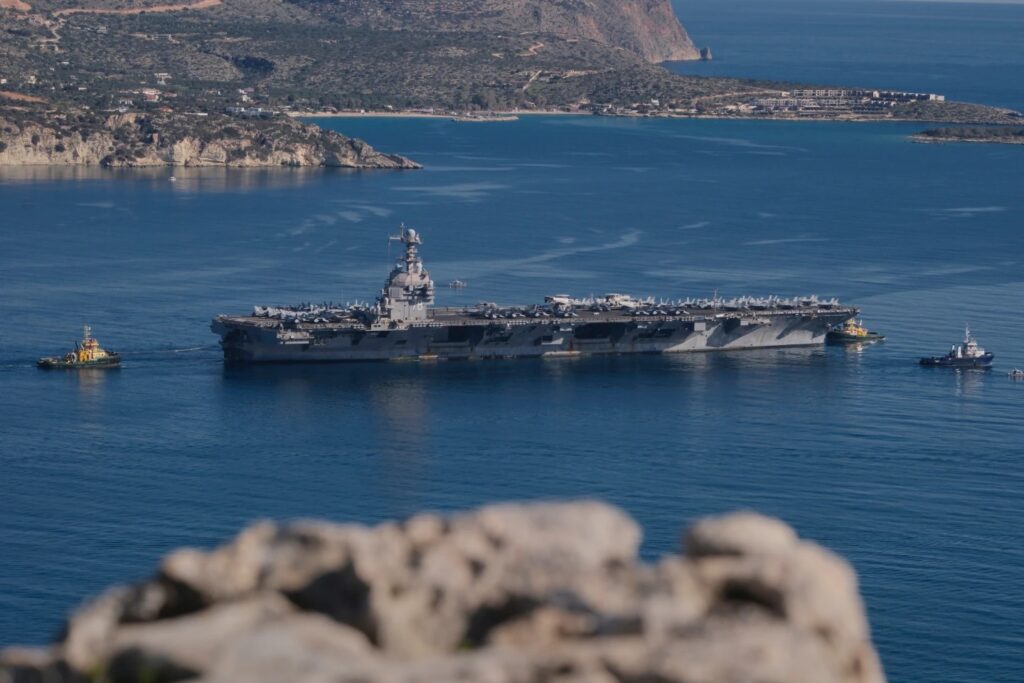
WASHINGTON — Global maritime security and strategic defense deployments are undergoing significant adjustments as the U.S. Navy rebalances its aircraft carrier fleet across the Indo-Pacific and Middle East regions.
With rising geopolitical tensions involving China in the South China Sea and ongoing security challenges in the Middle East, military strategists and defense officials are carefully managing fleet carrier rotation schedules to maintain global deterrence and project naval power effectively.
Strategic Carrier Deployments in the Indo-Pacific and Middle East
The U.S. Navy’s carrier strike groups (CSGs) serve as the primary instrument of forward power projection, sea lane defense, and crisis response. Recent global operational demands have tested fleet readiness and deployment cycles.
-
Indo-Pacific Deterrence: Maintaining a persistent carrier presence near the Taiwan Strait and East Asian maritime corridors remains a top priority to counter China’s expanding naval footprint.
-
Middle East Security Commitments: Maritime security threats in key waterways—such as the Red Sea, Bab el-Mandeb Strait, and Persian Gulf—have required sustained carrier strike group deployments to safeguard commercial shipping lanes.
-
Maintenance and Turnaround Pressures: High operational tempo places increased strain on naval shipyards, requiring careful scheduling for maintenance overhauls and crew rest cycles.
U.S. Navy Global Carrier Fleet Overview:
• Total Active Fleet: 11 Nuclear-Powered Aircraft Carriers (Nimitz & Gerald R. Ford Classes)
• Primary Strategic Theaters: U.S. Indo-Pacific Command (INDOPACOM) & U.S. Central Command (CENTCOM)
• Operational Challenge: Balancing long-term deterrence in Asia with real-time crisis response in the Middle East
• Fleet Rotation: Standard 6-to-7 month deployment cycles subject to operational extensions
Challenges of Maintaining Long-Term Global Naval Readiness
Military analysts emphasize that overextending aircraft carrier strike groups can impact long-term force readiness and force structure planning.
Strategic Priorities for U.S. Naval Leadership
-
Preventing Capability Gaps: Defense planners work to ensure seamless handoffs between deploying and returning carrier strike groups to prevent vulnerability windows in critical waterways.
-
Allied and Partner Integration: Expanding joint naval exercises alongside international allies—including Japan, Australia, the UK, and regional partners—helps offset operational pressures on U.S. assets.
-
Modernization and Fleet Expansion: Accelerating the construction of next-generation Gerald R. Ford-class carriers and integrating uncrewed carrier-based aircraft remain vital to future naval readiness.
Global Security Outlook and Fleet Positioning
As strategic competition evolves, the positioning of U.S. Navy carrier strike groups will continue to serve as a key barometer of international defense priorities and global maritime stability.












Comment