


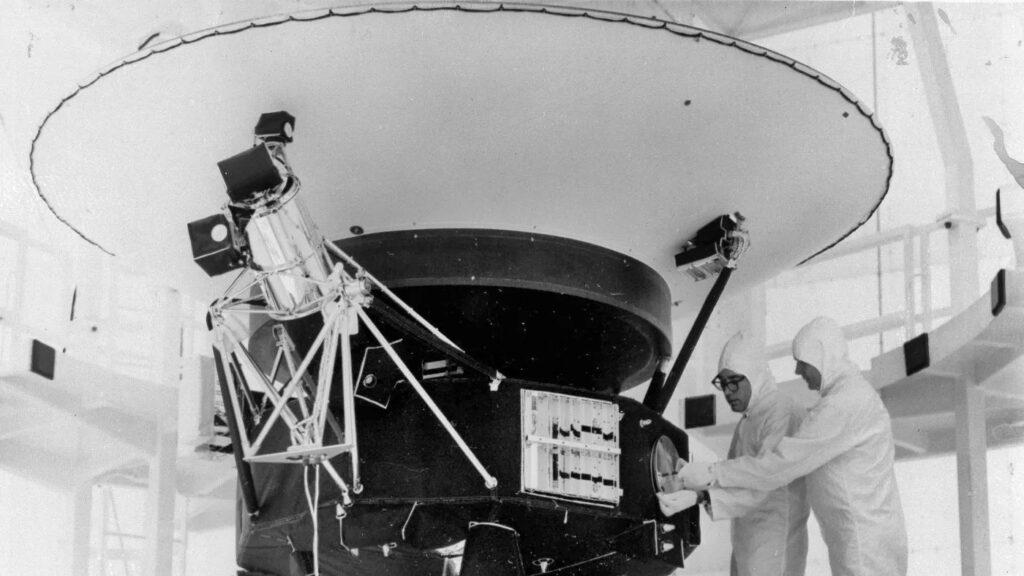
WASHINGTON, D.C. — Nearly five decades after leaving Earth, NASA’s historic Voyager 2 spacecraft has been granted an extra year of active life. Thanks to an innovative power-saving maneuver devised by engineers at the Jet Propulsion Laboratory (JPL), the iconic interstellar probe will continue transmitting invaluable scientific data from the edge of deep space.
The ‘Big Bang’ Maneuver: How Engineers Saved Voyager 2
Launched in 1977, Voyager 2 and its twin, Voyager 1, draw their operational energy from radioisotope thermoelectric generators (RTGs) that convert heat from decaying plutonium-238 into electricity. Because the plutonium supply degrades steadily over time—causing the spacecraft to lose roughly four watts of power each year—mission operators have faced increasingly tight energy budgets.
To prevent Voyager 2 from having to shut down yet another core scientific instrument, engineers engineered a clever software and hardware adjustment known internally as the “Big Bang” fix.
Key Details of the Upgrade
-
Reconfiguring Onboard Heaters: Mission specialists successfully powered down specific non-essential legacy systems—including an old digital tape recorder that was previously kept running solely for residual heat—and swapped them with lower-power alternatives.
-
Maintaining Thermal Safety: Crucially, engineers ensured the spacecraft maintained adequate operating warmth to survive the freezing, 2.7-Kelvin background temperature of interstellar space.
-
Preserving Core Science Instruments: The power-saving breakthrough successfully safeguards Voyager 2’s three remaining active instruments: its magnetometer, plasma wave subsystem, and cosmic ray subsystem.
A Journey Beyond the Solar System
Now cruising more than 13 billion miles from Earth, Voyager 2 continues to venture into uncharted territory.
What’s Next for the Voyager Program
-
Extending Science Return: The successful implementation of the “Big Bang” hack buys researchers vital time to study the interstellar medium—the region outside our sun’s protective bubble—before the probes permanently go silent.
-
Applying the Fix to Voyager 1: Encouraged by the success of Voyager 2, NASA engineering teams are currently preparing to execute a similar power-saving adjustment for Voyager 1, which is even further away.
As these legendary spacecraft approach their 50th year in operation, NASA’s ingenious remote engineering continues to push the boundaries of what is possible in deep-space exploration.










Comment