


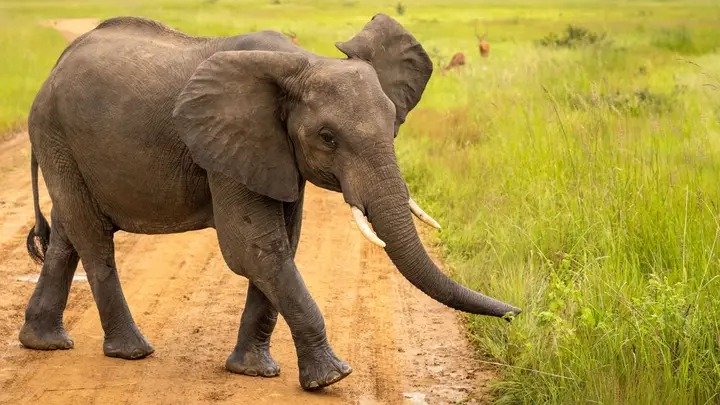
TEL AVIV — Early human ancestors may owe their evolutionary survival to an unexpected partner: the giant prehistoric elephant.
According to a landmark study led by researchers at Tel Aviv University, megaherbivores—specifically extinct straight-tusked elephants—provided essential caloric density, fat reserves, and raw tool materials that allowed early hominins to survive severe climate shifts and expand across Eurasia.
The Caloric Goldmine: How Megaherbivores Fueled Hominin Evolution
Published in peer-reviewed archaeological journals, the research highlights how hunting and scavenging giant elephants allowed early human species, such as Homo erectus, to secure massive amounts of high-energy fats and nutrients that plant foods alone could not provide.
While smaller game like deer and wild boars were more abundant, a single straight-tusked elephant (Palaeoloxodon antiquus) could yield up to several tons of meat and fat, sustaining an entire band of early humans for weeks.
-
Essential Fat Reserves: Brain development and survival in cold environments required dense animal fats. Elephants provided an unparalleled source of fat concentrated in their marrow, skull cavities, and fat pads.
-
Caloric Efficiency: Hunting or butchering a single megaherbivore offered a far higher return on energy expenditure compared to tracking multiple small, fast-moving animals.
-
Bone Tool Engineering: Beyond nutrition, large elephant bones provided the durable raw material required for early hominins to craft specialized bifacial stone-flaking tools and heavy scrapers.
Prehistoric Elephant vs. Small Game Resource Comparison:
• Target Species: Palaeoloxodon antiquus (Straight-tusked elephant) vs. Cervids/Equids
• Yield Efficiency: Single elephant = ~4,000–7,000 lbs of usable meat and fat
• Key Nutrients: High-density brain fat, marrow, and essential lipids
• Secondary Uses: Thick ivory & dense limb bones for heavy-duty tool manufacturing
• Evolutionary Impact: Fueled brain encephalization and migration into cooler climates
Why the Disappearance of Elephants Forced Human Innovation
The study also outlines how the eventual decline and extinction of megaherbivores forced early humans to adapt, triggering significant technological and cultural evolution.
Key Takeaways on Human Adaptation
-
Tool Refinement: As giant elephants became scarce, early humans had to refine their hunting tools—developing lighter spears, throwing weapons, and stone arrowheads to capture faster, smaller game.
-
Cooperative Hunting Strategies: Tracking smaller, agile animals required more complex social organization, communication, and strategic coordination among hunting groups.
-
Cognitive Growth: The shift from relying on massive, slow-moving megaherbivores to elusive prey drove rapid cognitive development and linguistic evolution in late Pleistocene human populations.
Implications for Human Evolutionary History
The findings reshape our understanding of early human diet and migration. By establishing the crucial relationship between hominins and megaherbivores, archaeologists have gained a clearer picture of how environmental resources shaped the physical and cognitive trajectory of modern humans.












Comment