


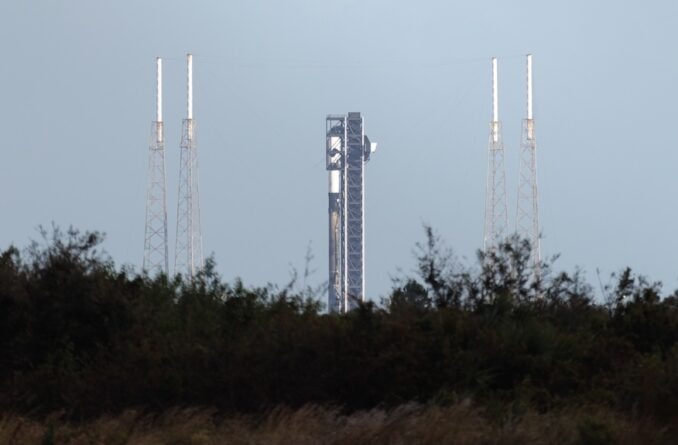
CAPE CANAVERAL, Fla. — SpaceX successfully launched a Falcon 9 rocket carrying 29 Starlink broadband satellites into low Earth orbit from Space Launch Complex 40 (SLC-40) at Cape Canaveral Space Force Station.
The successful mission marks another key milestone for the aerospace company as it continues expanding its global satellite internet constellation to deliver high-speed connectivity across remote and underserved regions worldwide.
Precision Nighttime Launch Expands Global Starlink Constellation
The two-stage Falcon 9 rocket lifted off during an evening launch window following favorable weather conditions along Florida’s Space Coast.
-
Payload Mission: Deployment of 29 next-generation Starlink satellites equipped with direct-to-cell capabilities and upgraded optical space lasers for orbital data routing.
-
Target Orbit: Low Earth Orbit (LEO) at an altitude optimized for global low-latency internet coverage.
-
Booster Recovery: The reusable Falcon 9 first-stage booster successfully returned to Earth, executing a vertical pinpoint landing on a autonomous droneship stationed in the Atlantic Ocean.
SpaceX Starlink Mission Overview:
• Launch Site: Space Launch Complex 40 (SLC-40), Cape Canaveral, FL
• Rocket Vehicle: Two-stage SpaceX Falcon 9
• Payload: 29 Starlink broadband satellites
• Booster Landing: Autonomous Droneship ("Just Read the Instructions")
• Mission Status: Orbital insertion confirmed; booster successfully recovered
Reusability and High Launch Cadence Drive Commercial Space Operations
This mission represents another successful flight and landing for the Falcon 9 first stage, underscoring SpaceX’s ongoing commitment to rapid rocket reusability to lower spaceflight costs.
Key Operational Milestones
-
First-Stage Booster Record: The booster completed its multi-flight life cycle, having previously supported several commercial, military, and internal Starlink missions.
-
Payload Fairing Reuse: Both halves of the protective nosecone fairing were recovered from the ocean surface downrange for refurbishing and future missions.
-
Constellation Expansion: With this launch, the total number of deployed Starlink satellites pushes closer to full global operational capacity.
Expanding Global High-Speed Internet Access
The Starlink constellation provides low-latency, high-speed internet to millions of residential, commercial, and maritime users across dozens of countries.
With continuous weekly launches from Cape Canaveral and Kennedy Space Center in Florida, SpaceX continues to strengthen network bandwidth and connectivity for isolated communities, disaster relief teams, and mobile aviation sectors worldwide.











Comment