


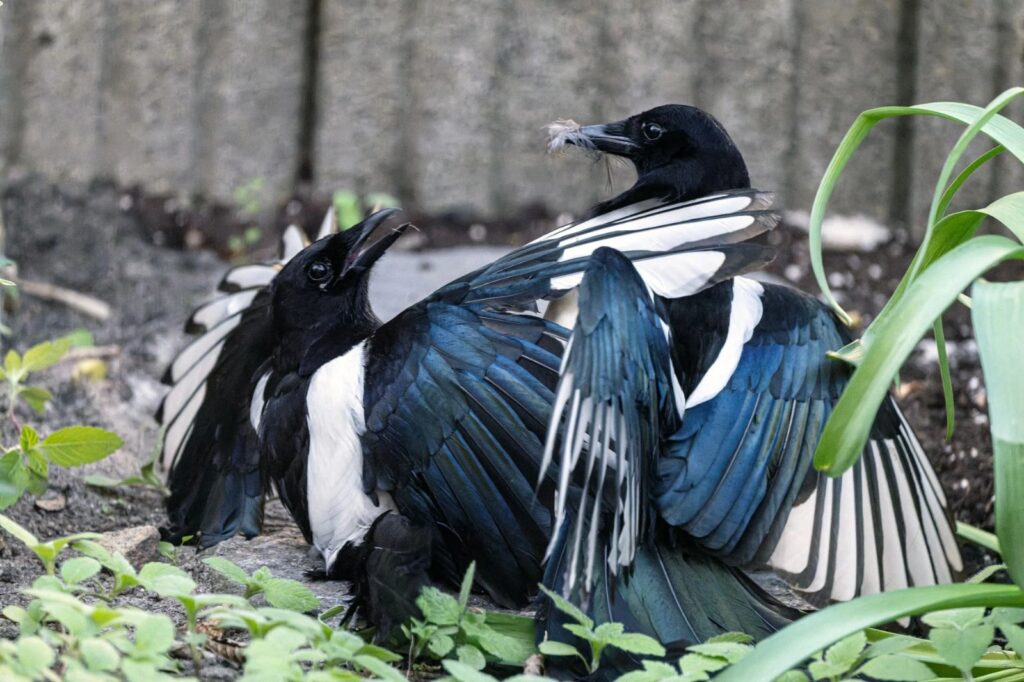
SUNSHINE COAST, Queensland — In a pilot study designed to map bird movements, Australian researchers fitted five wild magpies (Gymnorhina tibicen) with lightweight GPS tracking harnesses. Within minutes of deployment, the crafty birds began working together to peck, snip, and remove the devices from one another, turning a failed tracking experiment into a groundbreaking observation of avian cooperation.
The study, led by animal ecologist Dr. Dominique Potvin and researchers at the University of the Sunshine Coast, provides some of the first documented evidence of targeted, altruistic “rescue behavior” in songbirds.
How Australian Magpies Dismantled High-Tech GPS Trackers
The research team spent weeks habituating a local flock at Pacific Paradise on Queensland’s Sunshine Coast to a ground feeding station before fitting five birds—one adult male, two adult females, and two juveniles—with 2.7-gram GPS tracking loggers.
The harnesses were specifically engineered with a magnetic release weak point, designed so researchers could recover the devices without needing to recapture the birds. However, the magpies discovered an alternative solution.
-
Rapid Response: Within 10 minutes of fitting the final device, an untagged adult female magpie began using her beak to pick at the harness on a juvenile bird.
-
Targeted Problem-Solving: The female successfully removed the harness after approximately 10 minutes of targeted pecking at the weak point.
-
Flock-Wide Collaboration: Over the next 24 to 72 hours, flockmates systematically stripped the tracking harnesses off all five tagged birds.
Australian Magpie Tracking Study Overview:
• Location: Pacific Paradise, Sunshine Coast, Queensland
• Study Subjects: 5 Australian Magpies (1 adult male, 2 adult females, 2 juveniles)
• Tracker Weight: 2.7 grams (less than 3% of body weight)
• Result: 100% of trackers removed by flockmates within days
• Key Behavior Documented: Altruistic "rescue behavior" and cooperative problem-solving
The Science of “Rescue Behavior” and Cognitive Intelligence in Birds
While animals frequently attempt to preen or remove foreign objects from their own bodies, removing an object from a peer without receiving an immediate reward is extraordinarily rare in the animal kingdom.
What Is Rescue Behavior?
-
Helping Without Direct Reward: In behavioral ecology, “rescue behavior” occurs when one individual helps free another from a stressful situation or impediment with no direct benefit or food reward for itself.
-
Complex Social Dynamics: Australian magpies live in cooperative social groups of up to 12 individuals. Researchers suggest that living in complex, high-density social structures drives higher cognitive abilities and problem-solving skills.
-
Perception of Threat: Scientists suspect the magpies may have perceived the unfamiliar tracking backpacks as parasites or harmful objects affecting their flockmates, triggering a collective grooming and removal response.
Redefining How Scientists Study Social Wildlife
While the researchers did not get the movement and territory data they originally sought, the experiment delivered a vital lesson for field ornithologists and wildlife tracking initiatives globally.
Future studies involving highly social, highly intelligent species like magpies or corvids must account for group dynamics, as attaching equipment to one individual effectively introduces a target to an entire cooperative network capable of solving complex physical challenges together.











Comment