


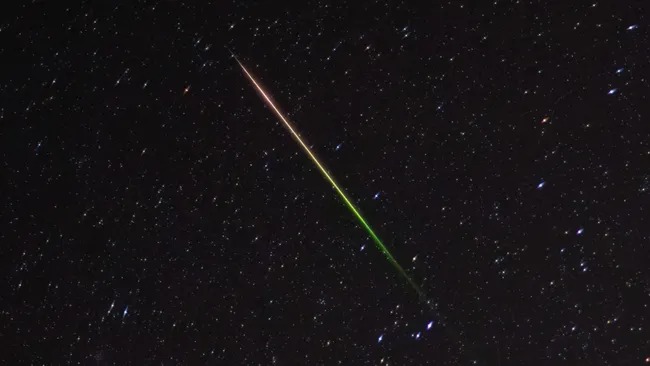
CAPE CANAVERAL, Fla. — Stargazers across the Northern Hemisphere were treated to a breathtaking celestial show as the 2026 Perseid meteor shower reached its annual peak.
Astrophotographers and skywatchers gathered in dark-sky locations worldwide to witness up to 100 shooting stars per hour streak across the night sky. Thanks to perfect timing alongside a new moon phase, zero moonlight interference allowed even the faintest fireballs and meteor trails to illuminate the atmosphere.
Perfect Viewing Conditions Highlight the 2026 Perseid Peak
The Perseids—active every year from mid-July through late August—are created when Earth passes through the dusty debris field left behind by Comet 109P/Swift-Tuttle.
As tiny comet fragments enter Earth’s upper atmosphere at speeds of roughly 37 miles per second (60 kilometers per second), extreme air friction causes them to burn up, generating brilliant, high-speed streaks of light.
-
New Moon Advantage: The 2026 peak coincided directly with a new moon, offering exceptionally dark skies that made this year’s display one of the best in recent history.
-
High Zenithal Hourly Rates: Observers in rural locations away from urban light pollution reported counting between 50 and 100 meteors per hour during peak pre-dawn hours.
-
Fireball Activity: Numerous astrophotographers captured persistent green and white plasma trains alongside exploding fireballs created by larger meteoroids.
Perseid Meteor Shower 2026 Fact Sheet:
• Parent Body: Comet 109P/Swift-Tuttle
• Peak Activity Window: Overnight August 12–13, 2026
• Peak Rate: Up to 100 meteors per hour under dark skies
• Entry Speed: ~37 miles per second (60 km/s)
• Atmospheric Burn Height: ~60 miles (97 km) above Earth
Astrophotography Highlights from Around the Globe
From dark-sky reserves in North America and Europe to remote desert locations in Asia, photographers captured stunning composite and long-exposure images of the celestial event.
Key Observations and Highlights
-
Radiant in Perseus: While shooting stars zipped across the entire sky, their trails pointed back toward the radiant point in the constellation Perseus, situated near Cassiopeia.
-
Global Stargazing Turnout: National parks, rural observatories, and stargazing festivals saw thousands of enthusiasts gather with lawn chairs and cameras to view the display.
-
Eclipse Overlap: A few fortunate observers in the path of the August 12 total solar eclipse across southern Europe even spotted early Perseid fireballs during daytime totality.
Continuing Stargazing Opportunities
While the peak has passed, the Space.com Stargazing Guide notes that the Perseids will remain active through August 24. Skywatchers can still catch lingering shooting stars by looking northeast during the early pre-dawn hours away from artificial light.










Comment