


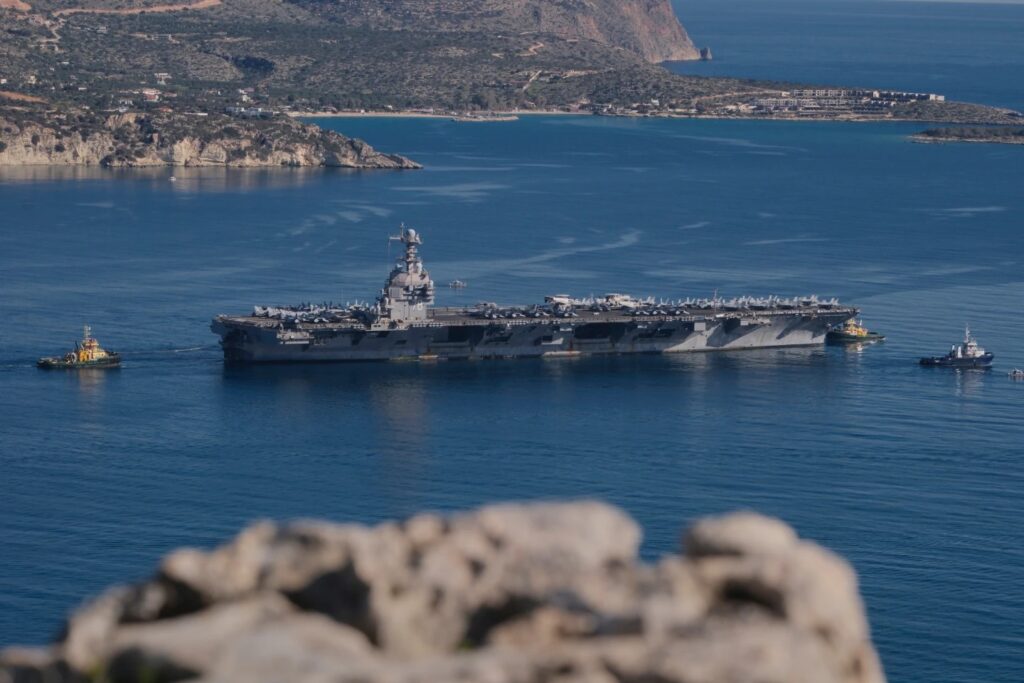
WASHINGTON — Military analysts and naval defense experts warn that the U.S. Navy is facing an escalating aircraft carrier deficit, leaving global strike groups stretched thin between commitments in the Indo-Pacific and ongoing combat operations in the Middle East.
With carrier battle groups deployed to deter regional conflict and maintain open maritime trade lanes in the Persian Gulf, strategic posture in the Pacific has experienced noticeable coverage gaps, raising concerns over deterrence against China’s expanding naval fleet.
Global Naval Posture and Fleet Overextension Risks
The U.S. Navy maintains a core fleet of 11 nuclear-powered aircraft carriers. However, maintenance overhauls, shipyard delays, and long-term deployment rotations restrict the number of operational carriers available at any single time.
The sustained deployment of multiple carrier strike groups to the Middle East has forced defense planners to extend deployment schedules and alter planned Pacific patrols.
-
Indo-Pacific Deterrence Gaps: The redeployment of carrier groups away from the Western Pacific reduces continuous naval presence near critical maritime chokepoints.
-
Maintenance Backlogs: Accelerated operational tempos without adequate shipyard downtime risk compounding mechanical wear and long-term fleet fatigue.
-
China Naval Parity: Defense experts note that the People’s Liberation Army Navy (PLAN) continues expanding its domestic carrier program, narrowing the quantitative naval gap in East Asia.
U.S. Navy Aircraft Carrier Force Posture Summary:
• Active Carrier Fleet: 11 Nimitz- and Gerald R. Ford-class supercarriers
• Operational Challenge: Balancing Middle East combat deployments with Pacific presence
• Key Strategic Concern: Deterrence coverage gaps in the Indo-Pacific theatre
• Structural Bottleneck: Public shipyard drydock capacity and maintenance backlogs
Strategic Implications for U.S. Defense Policy
The current fleet pinch highlights a long-standing debate within military planning regarding global force distribution and naval modernization priorities.
Key Factors Shaping the Carrier Shortage Debate
-
Compounding Deployment Schedules: Extending deployment lengths beyond the standard six-to-seven-month window increases strain on naval crews and ship systems.
-
Shipyard Industrial Base Constraints: Limited drydock facilities in the U.S. mean routine maintenance cycles face multi-month delays, holding back carriers from returning to active duty.
-
Alternative Force Packages: Defense planners are evaluating whether amphibious assault ships, long-range bombers, and land-based air wings can effectively supplement carrier strike power in high-priority zones.
Future Defense Outlook
As national security leaders assess long-term force structure, defense officials face tough strategic choices between fulfilling immediate Middle East security commitments and maintaining robust deterrent posture in the Pacific.












Comment