


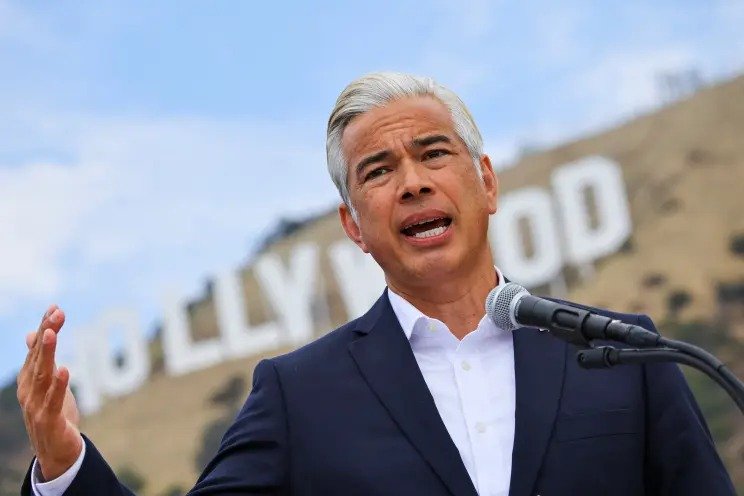
LOS ANGELES — California Attorney General Rob Bonta’s legal challenge to halt the proposed $110 billion merger between Paramount Global and Warner Bros. Discovery has triggered unexpected political tension, as mainstream Democrats and labor allies voice opposition to the state’s intervention.
While state regulators cite anti-trust and consumer choice concerns in the entertainment sector, key Democratic lawmakers, industry unions, and economic development advocates argue that blocking the deal could destabilize California’s film and television production economy.
Political and Economic Friction Over the Entertainment Megamerger
The antitrust lawsuit filed by the California Department of Justice aims to prevent the consolidation of two legacy Hollywood studios, arguing that a unified media giant would reduce competition and raise subscription costs for streaming consumers nationwide.
However, prominent figures within the Democratic party contend that legacy media companies need scale to remain competitive against global technology platforms and international streaming services.
-
Union & Industry Concerns: Entertainment labor groups and production unions emphasize that protracted regulatory battles create market uncertainty, potentially delaying greenlights for major feature films and network series.
-
Competitive Landscape: Supporters of the merger argue that combining Paramount and Warner Bros. Discovery is essential to compete effectively against tech-heavy entertainment platforms like Netflix, Amazon Prime Video, and Apple TV+.
-
State Economic Impact: Local lawmakers express concern that blocking corporate consolidation could push future studio investments, soundstage operations, and post-production jobs out of California to rival production hubs.
Paramount-Warner Bros. Discovery Merger Snapshot:
• Combined Entity Valuation: Estimated $110 Billion
• Key Regulatory Opponent: California Department of Justice (AG Rob Bonta)
• Core Legal Argument: Protection of market competition & consumer streaming prices
• Opposition Argument: Preserving California production jobs & legacy studio competitiveness
Streaming Market Dynamics and Regulatory Outlook
The legal debate comes at a pivotal moment for legacy Hollywood studios adapting to shifting global viewing habits and declining cable subscription revenues.
Strategic Priorities for the Combined Media Giant
-
Consolidation of Direct-to-Consumer Platforms: Merging streaming infrastructures to reduce churn and offer unified content bundles spanning news, sports, and theatrical releases.
-
Cost Synergies vs. Job Preservation: Management aims to cut redundant operational costs, while labor advocates push for guarantees to protect physical production jobs in Southern California.
-
Federal vs. State Antitrust Enforcement: The California DOJ’s independent legal action highlights a growing trend of state attorneys general taking the lead on high-profile corporate merger reviews.
Industry Impact and Legal Timeline
As pre-trial hearings approach, media analysts and legal experts continue monitoring court filings and potential settlement negotiations between studio executives and state regulators.
The eventual ruling will set a critical precedent for future media consolidation and regulatory oversight across the global entertainment industry.












Comment