


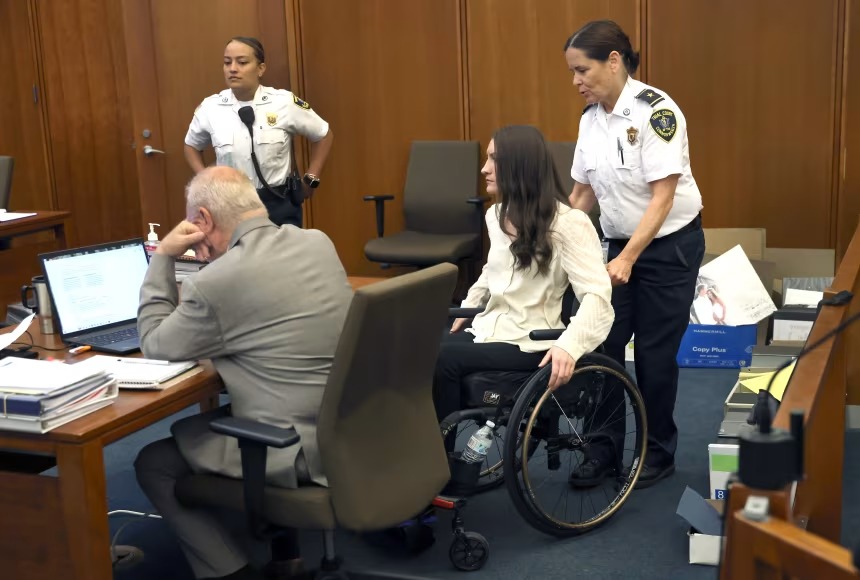
PLYMOUTH, MASSACHUSETTS — The high-profile murder trial of Lindsay Clancy, a Massachusetts mother accused of killing her three young children in January 2023, has entered a critical phase. Proceedings in the Plymouth County courtroom have brought forward emotional testimony, diary entries, and expert accounts detailing the mental health struggles surrounding the tragedy.
Inside the Courtroom: Defendant’s First Words and Emotional Reactions
The recent week of the trial provided a direct look at Lindsay Clancy’s physical and emotional state as she faces three counts of murder in the deaths of her children: Cora, 5; Dawson, 3; and 8-month-old Callan.
While Clancy has not taken the witness stand in her own defense, she communicated in the courtroom through several notable moments:
-
Addressing the Court: In her first audible words heard by the public during the trial, Clancy responded with an even voice, “Yes, your honor,” when answering procedural questions from Judge William F. Sullivan.
-
Visible Distress: Clancy sobbed loudly and covered her face during difficult medical testimony regarding the autopsy of her infant son, Callan.
-
Journal Entries Read Aloud: Prosecutors and investigators shared personal diary entries written by Clancy in the months leading up to the tragedy, revealing intense parenting stress, severe insomnia, and a desperate plea for help. “It’s like I’m so desperate to get a mental break… I want help. I want to be well,” she wrote.
The Central Legal Battle: Postpartum Psychosis vs. Intentional Actions
The core of the trial hinges on conflicting interpretations of Clancy’s mental state at the time of the incident in Duxbury, Massachusetts.
The Defense Position
-
Not Criminally Responsible: Defense attorneys argue that Clancy was suffering from severe postpartum psychosis and extreme mental illness, plunging her into a psychotic episode that stripped her of her ability to act rationally.
-
Suicide Attempt: Counsel emphasizes that her jump from a second-story window following the incident—which left her partially paralyzed—was a genuine suicide attempt, not a calculated escape.
The Prosecution’s Case
-
Intentional Actions: Prosecutors contend that Clancy acted deliberately, rationally, and swiftly to accomplish a specific goal, asserting she was not in the throes of a psychotic break despite acknowledging her struggles with postpartum depression and anxiety.
Medical Testimony and Prior Treatment
The court also heard testimony from psychiatrists and mental health professionals who treated Clancy in the weeks leading up to the tragedy. Medical witnesses recounted sessions where Clancy reported feeling overwhelmed, anxious, and experiencing intrusive thoughts, though treatment providers testified she had denied having homicidal ideation or active plans to harm her family during their clinical meetings.
As expert witnesses continue to take the stand, the trial is expected to remain a deeply scrutinized legal examination of postpartum mental illness, medical treatment histories, and criminal responsibility under Massachusetts law.












Comment