


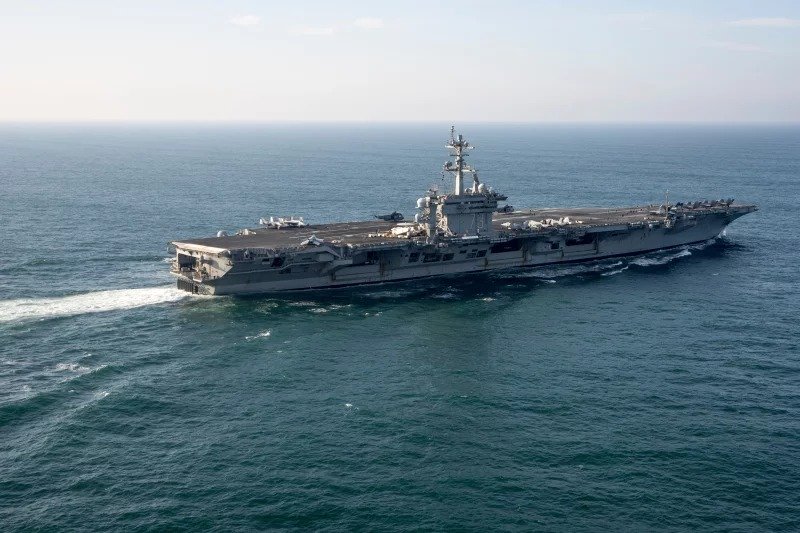
WASHINGTON — The Pentagon has ordered the USS George H.W. Bush carrier strike group to deploy to the Middle East, replacing the USS Abraham Lincoln, which has been operating under extended deployment in the region.
The strategic naval shift comes following reports of mechanical issues and maintenance challenges aboard the USS Abraham Lincoln, highlighting operational strain across the U.S. Navy’s carrier fleet during a period of heightened regional tension in the Middle East.
Strategic Carrier Swap Addresses Operational Strain in the Middle East
The deployment of the USS George H.W. Bush aims to maintain continuous U.S. naval force presence across critical maritime corridors, including the Red Sea, the Gulf of Aden, and the Arabian Sea.
Defense officials noted that rotating carrier strike groups ensures operational readiness while allowing long-deployed vessels and crew members to undergo necessary maintenance and depot-level repairs.
-
USS Abraham Lincoln Extended Duty: The carrier strike group has been deployed in the U.S. Central Command (CENTCOM) area of responsibility to deter regional escalation and safeguard international shipping lanes.
-
Maintenance & Readiness Factors: Recent reports indicated mechanical wear and maintenance needs aboard the Lincoln, prompting the Department of Defense to accelerate the arrival of a fresh carrier strike group.
-
USS George H.W. Bush Deployment: Operating from the Atlantic, the Nimitz-class aircraft carrier and its associated air wing and guided-missile destroyers will provide air defense, maritime security, and strategic deterrence upon arrival.
U.S. Navy Carrier Deployment Overview:
• Incoming Vessel: USS George H.W. Bush (CVN-77) Strike Group
• Outgoing Vessel: USS Abraham Lincoln (CVN-72) Strike Group
• Regional Area of Operations: U.S. Central Command (CENTCOM) / Middle East
• Primary Missions: Regional deterrence, freedom of navigation, maritime defense
Defense Experts Highlight Naval Readiness and Fleet Constraints
Naval analysts and defense experts point out that continuous carrier presence in the Middle East places significant operational demands on the Navy’s 11-carrier fleet.
Key Operational Challenges Facing the U.S. Navy
-
Extended Deployment Schedules: High operational tempo in recent years has forced several carrier strike groups to extend overseas deployments beyond standard six-to-seven-month windows.
-
Maintenance Backlogs: Continuous operations increase wear and tear on propulsion, catapult, and aviation systems, requiring extended shipyard maintenance periods upon return to home ports.
-
Strategic Resource Allocation: Balancing naval readiness between the Middle East, the Indo-Pacific, and the Atlantic remains a primary focus for Pentagon leadership.
Maintaining Regional Deterrence and Maritime Security
The arrival of the USS George H.W. Bush ensures that the United States retains a capital ship presence in the region to support coalition allies, safeguard global commercial shipping lanes, and respond to emerging security contingencies.
Pentagon officials affirmed that transit and handover operations between the two carrier strike groups will proceed seamlessly over the coming weeks.












Comment