


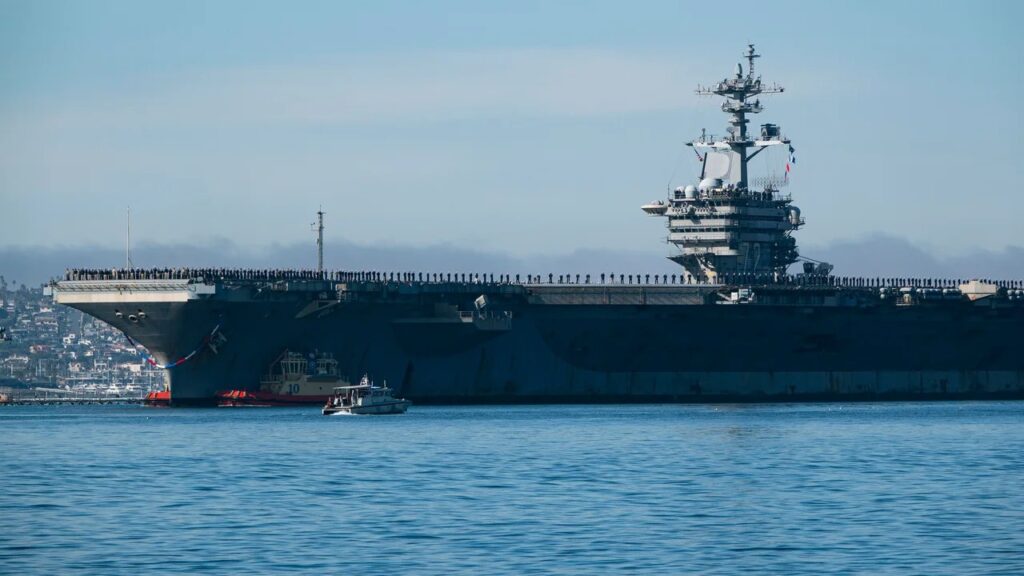
WASHINGTON — A coalition of Democratic senators has launched a formal inquiry demanding transparency and accountability from the U.S. Navy and the Department of Defense regarding a recent operational incident involving the Nimitz-class aircraft carrier USS Abraham Lincoln (CVN-72).
In a joint letter sent to Pentagon leadership, lawmakers called for an immediate, independent investigation into command decision-making, safety protocol compliance, and readiness standards aboard the nuclear-powered supercarrier.
Lawmakers Raise Safety and Operational Readiness Concerns
The congressional inquiry follows reports detailing an unexpected operational disruption during the carrier’s recent deployment in international waters.
Lawmakers expressed growing concern over sailor safety, equipment maintenance schedules, and leadership oversight across the naval fleet amid heightened global maritime deployments.
-
Demand for Transparency: Senators requested full unclassified disclosures regarding the timeline of events, maintenance logs, and command responses leading up to the incident.
-
Focus on Sailor Welfare: The inquiry emphasizes the safety and working conditions of the thousands of Navy personnel serving aboard the strike group.
-
Defense Oversight: Members of the Senate Armed Services Committee warned that recurring operational hiccups risk undermining long-term fleet readiness.
USS Abraham Lincoln Operational Inquiry Overview:
• Vessel Involved: USS Abraham Lincoln (CVN-72) Nuclear Aircraft Carrier
• Investigating Body: Senate Democratic Lawmakers & Defense Oversight Members
• Recipient: U.S. Department of Defense & Department of the Navy
• Core Issues: Command accountability, vessel maintenance, operational safety protocols
Senate Armed Services Committee Pushes for Pentagon Accountability
The formal inquiry reflects broader bipartisan scrutiny regarding military supply chain strain, prolonged carrier strike group deployments, and naval maintenance backyards across federal shipyards.
Key Demands Outlined in the Senate Inquiry
-
Independent Internal Review: Requiring the Naval Inspector General to conduct a comprehensive assessment of shipboard command protocols.
-
Maintenance and Readiness Audit: Reviewing whether deferred maintenance contributed to operational issues during deployment.
-
Congressional Briefings: Scheduling mandatory closed-door briefings with Senate Armed Services Committee leaders within the month.
Broader Implications for Global U.S. Naval Deployments
As the U.S. Navy maintains a strong forward presence across key strategic waterways—including the Indo-Pacific and Middle East—operational stability aboard carrier strike groups remains critical to national security.
Pentagon officials acknowledged receipt of the letter and stated that the Department of the Navy is cooperating fully with congressional leaders to address inquiries while maintaining mission readiness across the fleet.












Comment