


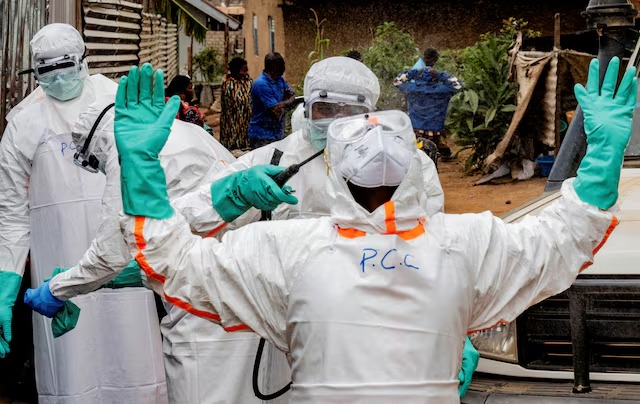
BUTA, Democratic Republic of the Congo — Health authorities in the Democratic Republic of the Congo (DRC) have identified a fatal case of Ebola in Bas-Uele province, an area not previously affected by the country’s ongoing epidemic.
The patient, a motorcycle taxi driver who traveled to Bas-Uele’s capital, Buta, from neighboring Haut-Uele province, tested positive for the virus after developing severe hemorrhagic symptoms. Health officials warn that the individual’s travel history raises significant concerns regarding wider transmission from multiple exposures prior to and immediately following his death.
Escalating Transmission Risks Across Central Africa
According to Jean-Jacques Muyembe, head of Congo’s National Institute for Biomedical Research (INRB), the patient migrated from Haut-Uele province—where 113 confirmed cases have been recorded—to Bas-Uele.
Health experts are carefully monitoring whether local transmission occurs in Bas-Uele before officially adding it to the formal list of affected provinces.
-
Travel Vector Exposure: As a motorcycle taxi driver, the deceased interacted with numerous passengers along transit corridors between Haut-Uele and Bas-Uele.
-
Fastest-Spreading Outbreak: The current epidemic has emerged as the fastest-spreading Ebola outbreak on record, surpassing 4,500 confirmed cases and 2,100 deaths across affected regions.
-
Viral Strain Complexity: The outbreak is driven by the Bundibugyo strain of the Ebola virus, for which there are currently no approved vaccines or targeted treatments, severely complicating containment efforts.
DRC Ebola Outbreak Geographic Overview:
• Newly Impacted Zone: Buta, Bas-Uele Province (First Case Confirmed)
• Originating Region of Patient: Haut-Uele Province (113 Confirmed Cases)
• Pre-Existing Affected Provinces: Ituri, North Kivu, South Kivu, Haut-Uele, Tshopo
• Dominant Pathogen: Bundibugyo ebolavirus (BDBV)
Health Authorities Intensify Contact Tracing and Isolation Measures
Containment teams from the DRC Ministry of Public Health and the World Health Organization (WHO) are deploying rapid-response personnel to track contact lines connected to the deceased driver.
Core Strategic Health Priorities
-
Targeted Contact Tracing: Health workers are establishing contact lists across the transit route between Haut-Uele and Buta to isolate high-risk individuals.
-
Community Isolation Centers: Local isolation units in Bas-Uele are being equipped to receive suspect patients showing early viral symptoms.
-
Cross-Border Surveillance: Neighboring provinces and international health agencies remain on high alert to prevent regional spillover.
Global Healthcare Implications and Emergency Response
With the epidemic showing sustained momentum across Central Africa, global public health organizations emphasize the need for enhanced diagnostic capacity and rapid field deployment.
International medical teams continue supporting local health infrastructure in the DRC to reinforce epidemiological surveillance, ensure safe burial protocols, and slow further geographical expansion.












Comment