


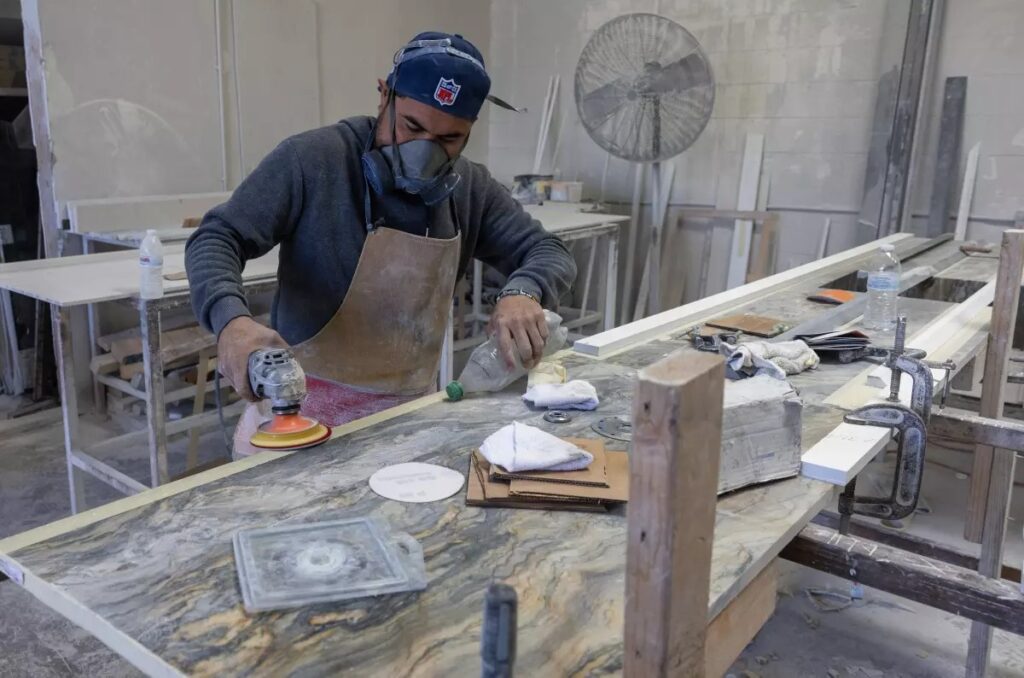
LOS ANGELES — Public health officials in California have reported nearly 600 confirmed cases of silicosis among countertop fabrication workers, pointing to a rapidly escalating occupational health emergency tied to the cutting and grinding of engineered stone slabs.
According to data released by the California Department of Public Health (CDPH), at least 592 stonecutters across the state have been diagnosed with the incurable lung disease since 2019. Among those impacted, 65 workers required organ transplants, and 31 have succumbed to the illness.
What Is Driving the Silicosis Epidemic Among Countertop Fabricators?
Silicosis is a severe, progressive lung condition caused by breathing in microscopic respirable crystalline silica dust particles. The health crisis has intensified due to the widespread popularity of artificial or “quartz” engineered stone countertops.
Unlike natural granite or marble, engineered stone slabs are composed of up to 90% or more crystalline silica bound together by synthetic resins and dyes. Dry cutting, grinding, or polishing these materials without proper ventilation or wet suppression releases hazardous airborne dust deep into workers’ lungs.
-
Disproportionate Impact on Vulnerable Workers: The vast majority of diagnosed stonecutters are young, immigrant Latino men, many of whom lack access to adequate health insurance or workplace protections.
-
Accelerated Disease Progression: Medical specialists note that exposure to high-concentration silica in artificial stone causes aggressive, rapid-onset forms of silicosis compared to traditional occupational exposures.
-
Southern California Epicenter: Los Angeles County—particularly the San Fernando Valley—serves as the primary epicenter, accounting for over 60% of all California cases due to the dense concentration of countertop distribution shops.
California Silicosis Outbreak Metrics (2019–2026):
• Confirmed Statewide Cases: ~592 Workers
• Double Lung Transplants Required: 65 Patients
• Confirmed Deaths: 31 Fatalities
• Primary Risk Factor: Fabrication of high-silica engineered stone (quartz)
• Target Demographic: Predominantly Latino immigrant laborers (Median Age: ~46)
State and Local Regulators Face Pressure for Emergency Measures
As caseloads continue to rise, public health advocates and labor representatives are calling for stricter enforcement of job safety standards, emergency workplace bans, and better medical screening tools.
Key Regulatory and Medical Interventions
-
Cal/OSHA Emergency Standards: State workplace safety regulators have instituted emergency rules mandating wet-cutting methods, dust suppression systems, and certified respirators for fabrication shops.
-
Mandatory Case Reporting: California public health authorities now classify silicosis as a mandatory reportable disease to track shop exposures and provide earlier intervention.
-
Advanced Medical Diagnostic Screening: Because standard chest X-rays frequently miss early-stage tissue scarring, health clinics are expanding access to high-resolution CT scans for exposed workers.
Outlook for the Stone Fabrication Industry
With California serving as a bellwether for occupational health policies nationwide, federal agencies and other state jurisdictions are closely evaluating California’s regulatory response.
Medical experts caution that without full compliance across all fabrication facilities, hundreds of additional workers remain at risk of developing irreversible lung damage from engineered stone dust.












Comment