


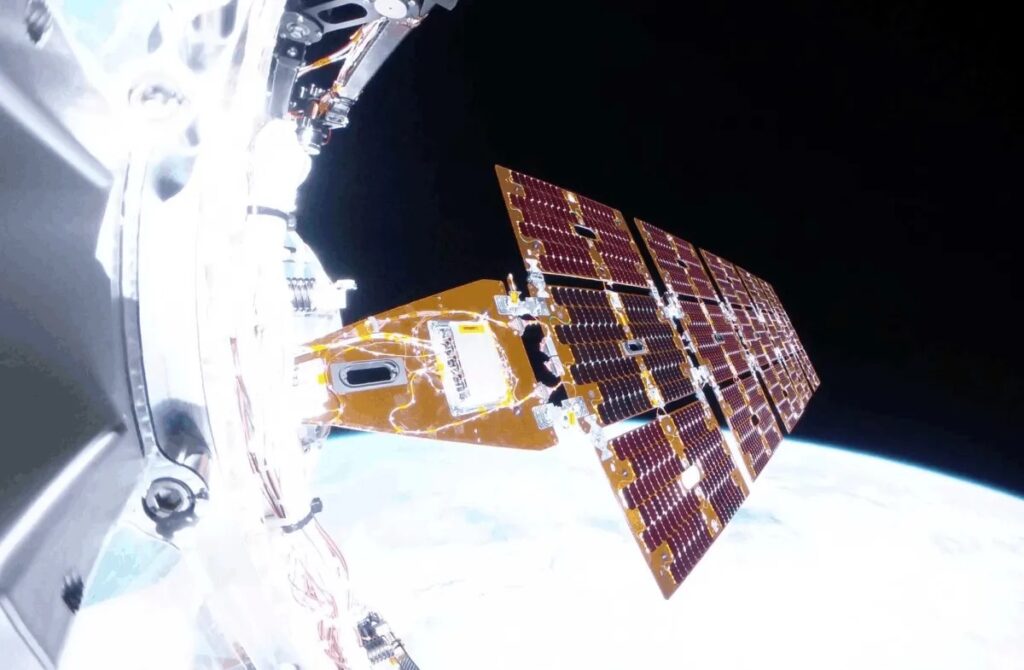
WASHINGTON & SAN FRANCISCO — Space infrastructure startup Katalyst Space Technologies has made significant progress in stabilizing and restoring control over its Swift satellite servicing spacecraft after experiencing a critical attitude control anomaly following its recent launch into orbit.
The successful recovery effort marks a key milestone for the commercial in-space servicing, assembly, and manufacturing (ISAM) sector as Katalyst works to demonstrate rendezvous and proximity operations (RPO) capabilities in low Earth orbit.
Technical Anomaly and Emergency Orbital Recovery Efforts
Shortly after reaching orbit, the Swift spacecraft encountered flight control issues caused by an attitude determination and control subsystem (ADCS) failure, causing the satellite to lose stable orientation toward the Sun and earthbound communication arrays.
Engineers at Katalyst’s mission control facility initiated emergency recovery protocols to prevent complete battery drain and stabilize the vehicle’s flight dynamics:
-
Solar Array Re-orientation: Ground controllers uploaded custom flight software patches to restore solar array alignment, successfully re-establishing positive power generation.
-
Communication Re-establishment: Telemetry and tracking links were recovered using ground station networks, allowing real-time diagnostic data downloads.
-
Thruster Stabilization: Reaction wheels and cold-gas thrusters were successfully re-calibrated to damp out anomalous rotation rates.
Katalyst Space Swift Mission Profile:
• Developer: Katalyst Space Technologies
• Primary Mission: In-Space Servicing, Assembly & Manufacturing (ISAM)
• Orbit: Low Earth Orbit (LEO)
• Primary Capability: Rendezvous, Proximity Operations & Space Domain Awareness
• Status: Spacecraft stabilized; systems diagnostic phase ongoing
Strategic Value of In-Space Servicing and Orbital Refueling
The Swift mission serves as a key technology demonstrator for next-generation satellite servicing, enabling commercial and defense operators to extend the operational lifespan of active satellites without expensive replacement launches.
Key Capabilities Under Demonstration
-
Rendezvous & Proximity Operations (RPO): Navigating within close physical proximity to client satellites using autonomous vision-based sensors.
-
Space Domain Awareness (SDA): Inspecting and diagnosing damaged or unresponsive orbital assets in real time.
-
Modular Payload Servicing: Demonstrating robotic docking mechanisms designed for future orbital refueling and payload upgrades.
Future Roadmap for Commercial Satellite Servicing
With control of the Swift spacecraft firmly re-established, Katalyst Space Technologies plans to proceed with the remaining phases of its flight test program.
As commercial satellite constellations expand and defense agencies prioritize space domain security, successful stabilization of autonomous servicing craft like Swift demonstrates the growing viability of a sustainable, circular space economy in low Earth orbit.












Comment