


WASHINGTON — NASA deployed a high-altitude research jet and launched dozens of scientific balloons to track the total solar eclipse as it swept across Greenland, Iceland, and Spain.
By chasing the Moon’s shadow from air and upper atmosphere platforms, space agency researchers extended their observation window beyond ground-level limits, gathering vital data on the Sun’s corona and Earth’s atmospheric reactions.
High-Altitude WB-57 Jet Extends Eclipse Totality Observation Window
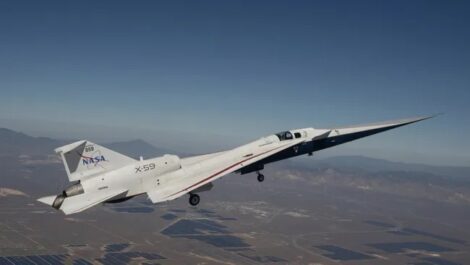
Flying at approximately 50,000 feet, NASA’s WB-57 research aircraft chased the eclipse shadow at nearly 460 mph, soaring far above potential cloud cover to capture uninterrupted imagery of the Sun’s outer atmosphere.
-
Extended Observation Window: While observers on the ground experienced up to 2 minutes and 18 seconds of total darkness, the high-speed jet expanded scientific observation time to nearly three minutes.
-
SCIFLI Imaging Suite: Equipped with four specialized cameras in the aircraft’s nose cone, the instrument recorded visible and infrared imagery at a rate of 20 high-resolution frames per second.
-
Solar Corona Dynamics: Data collected aims to resolve long-standing solar mysteries, including extreme coronal heating and the formation of solar prominences.
NASA WB-57 High-Altitude Mission Snapshot:
• Operating Altitude: ~50,000 Feet
• Flight Pursuit Speed: ~460 mph
• Imaging System: SCIFLI Multispectral Airborne Imager (4 cameras)
• Capture Rate: 20+ frames per second (visible & infrared spectrums)
• Primary Focus: Solar corona heat dynamics, solar wind, and coronal mass outflows
Scientific Balloons Study Earth’s Atmospheric Response to Sudden Darkness
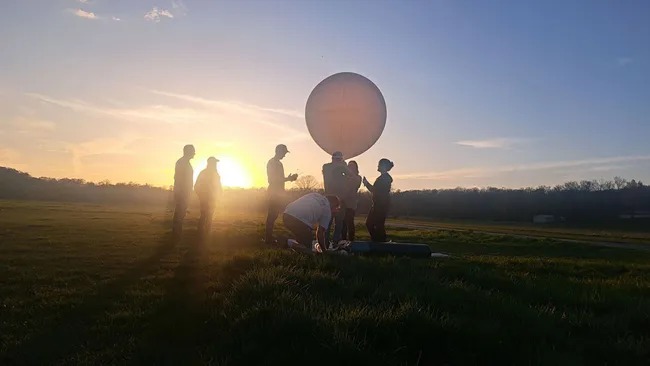
Complementing the jet’s solar observations, the NASA-supported Nationwide Eclipse Ballooning Project launched 86 research balloons along the path of totality in Iceland and Spain.
Key Atmospheric Science Objectives
-
Ozone and Temperature Monitoring: Sensor-equipped balloons measured fluctuations in ozone levels and tracked boundary layer shifts caused by sudden temperature drops.
-
360-Degree Shadow Tracking: Spanish research teams deployed camera-laden balloons to record high-altitude visuals of the lunar shadow racing across the planet’s surface.
-
Student Research Collaboration: Led by Montana State University, the balloon initiative involved university students from the U.S., Iceland, and Spain.
Advancing Solar Physics and Space Weather Science
The unique perspective gained during total solar eclipses allows scientists to study the Sun-Earth connection in ways that space-based satellites cannot match.
As NASA teams analyze the terabytes of optical and atmospheric data collected during the flight, findings will help refine solar wind models and improve space weather forecasting to better protect terrestrial power grids, communications satellites, and astronauts.










Comment