


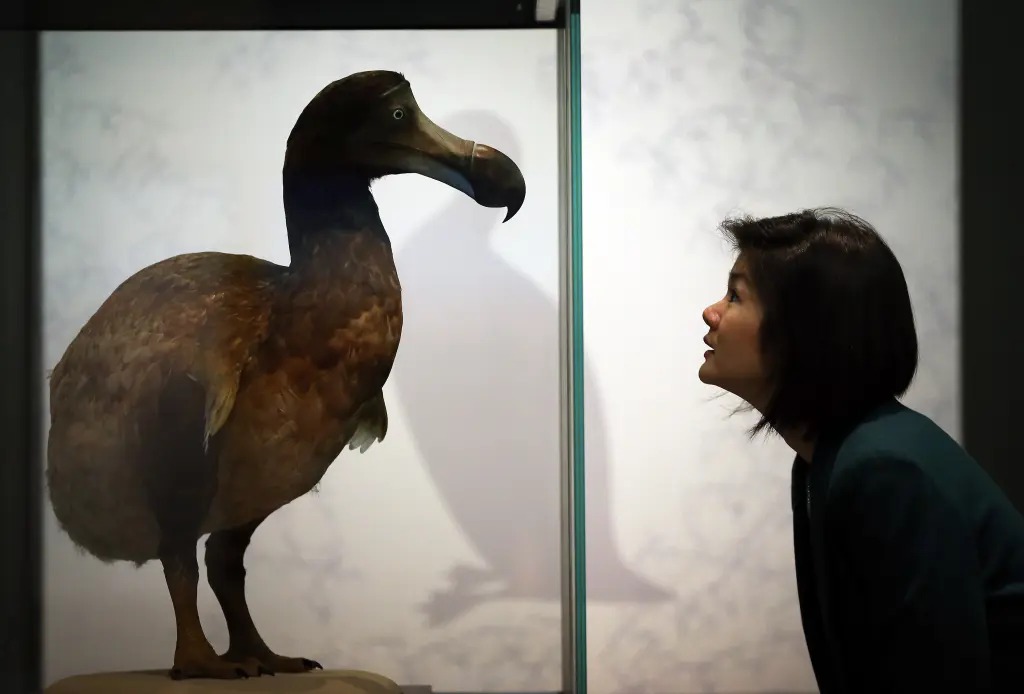
NEW YORK — For centuries, the dodo has served as the ultimate punchline of the natural world—a clumsy, dim-witted creature that waddled its way straight into extinction. However, a comprehensive new scientific study is turning that popular caricature on its head, revealing that the infamous flightless bird was actually remarkably smart.
Rethinking the Brainpower of Mauritius’ Most Famous Resident
Published in leading biological research journals, a team of international paleontologists and evolutionary biologists took a fresh look at the dodo’s cranial capacity and neural structures using advanced 3D computed tomography (CT) scanning.
By analyzing the preserved endocranial casts of Raphus cucullatus—the scientific name for the extinct bird native to the island of Mauritius—researchers discovered that the dodo possessed a brain size directly proportional to its body size, much like its closest living relatives.
Key Discoveries from the Cranial Analysis
-
Enlarged Olfactory Bulbs: The CT scans revealed that the dodo possessed notably well-developed olfactory lobes, indicating that the bird relied heavily on a sharp sense of smell to forage for seeds, fallen fruit, and small invertebrates on the forest floor.
-
Cognitive Parity with Pigeons: Because dodos are direct descendants of pigeons and doves, scientists previously assumed they shared the same limited cognitive faculties. The new data shows their brain-to-body scaling was well within the normal range for intelligent avian species.
Why History Got the Dodo All Wrong
The enduring myth of the dodo’s foolishness stems largely from its encounters with 16th-century European sailors. Because the birds evolved on an isolated island free from apex land predators, they lacked an innate fear of humans.
When Portuguese and Dutch explorers arrived in Mauritius, the dodos’ curious and unfazed approach made them easy targets for hunting. Sailors misinterpreted this lack of defensive panic as sheer stupidity, coining the unflattering reputation that persisted for over 400 years.
What This Means for Conservation and Evolutionary Science
-
Challenging Historical Bias: Evolutionary biologists emphasize that the dodo’s rapid extinction was a tragedy of geography and human introduction of invasive species (like rats, pigs, and macaques) rather than any evolutionary failure or mental deficiency.
-
Rewriting Avian History: The study serves as a crucial reminder to look past folklore and human biases when evaluating extinct fauna, using modern imaging technology to uncover the true biological complexity of lost ecosystems.












Comment