


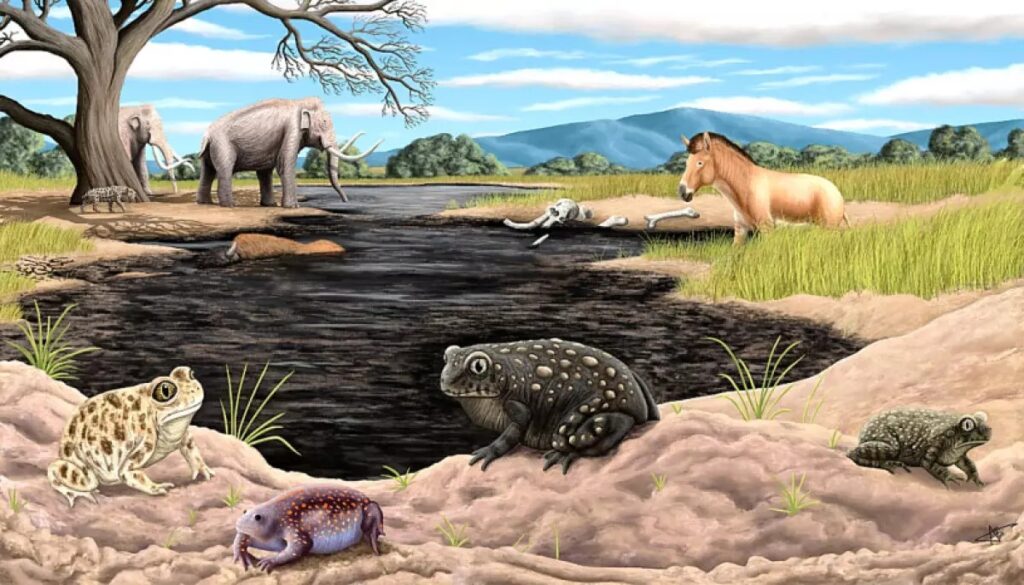
LOS ANGELES, CALIFORNIA — Paleontologists have uncovered a thrilling new piece of Ice Age history hidden in plain sight, identifying a brand-new species of tiny toad from fossils recovered at the world-famous La Brea Tar Pits in Los Angeles.
Unearthing an Ancient Californian Native
While the asphalt seeps of mid-city Los Angeles are globally famous for dramatic saber-toothed cats, dire wolves, and Columbian mammoths, researchers have turned their attention to the micro-fossils that tell the story of Southern California’s ancient microclimates.
By carefully examining small skeletal fragments preserved in the asphalt deposits, scientists confirmed the discovery of a previously unknown amphibian species that hopped across the Los Angeles basin during the Pleistocene epoch.
Key Details of the Discovery
-
A Unique Evolutionary Lineage: Morphological analysis of the tiny fossilized pelvic and skull bones revealed distinct anatomical differences separating the newly discovered toad from any living species currently found in California.
-
Clues to Past Climates: Amphibians are highly sensitive environmental indicators. The presence of this specific toad provides paleoclimatologists with vital data regarding rainfall patterns, seasonal temperatures, and freshwater availability in prehistoric Los Angeles.
The Power of Museum Collections
The groundbreaking identification underscores the immense scientific value of museum archive collections, where unstudied fossils can sit in storage for decades before modern technology and specialized expertise unlock their secrets.
Why Micro-Fossils Matter
-
Reconstructing Ancient Ecosystems: While large megafauna dominate museum displays, small creatures like toads, beetles, and rodents offer the most accurate picture of local environmental health and habitat stability.
-
Ongoing Research in Los Angeles: Paleontologists at the La Brea Tar Pits continue to sift through thousands of uncatalogued matrix bags, proving that even in a heavily studied fossil deposit, major new biological discoveries are waiting to be made.








Comment